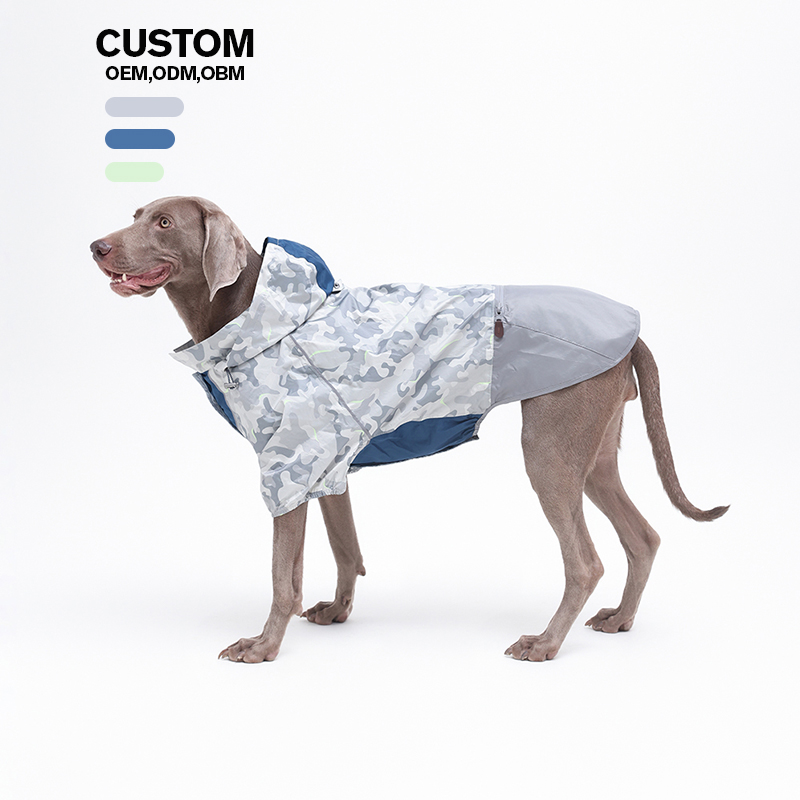
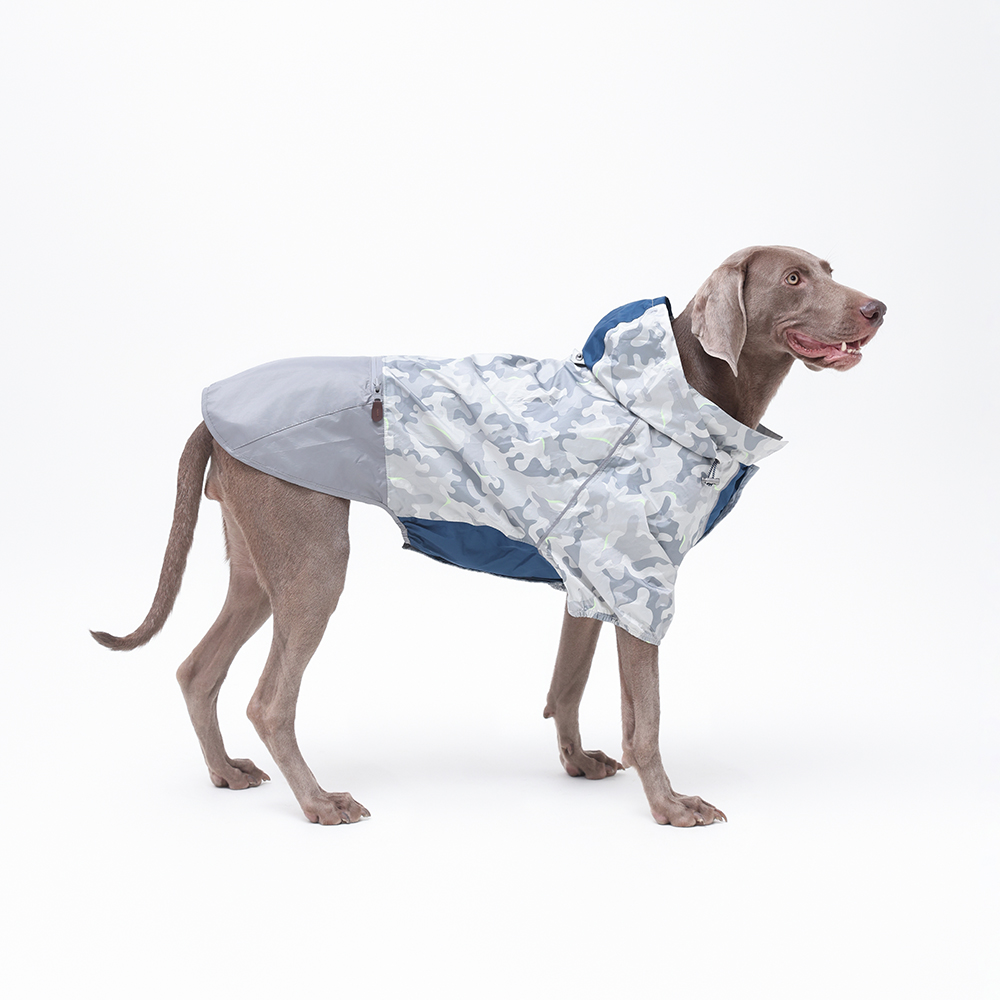
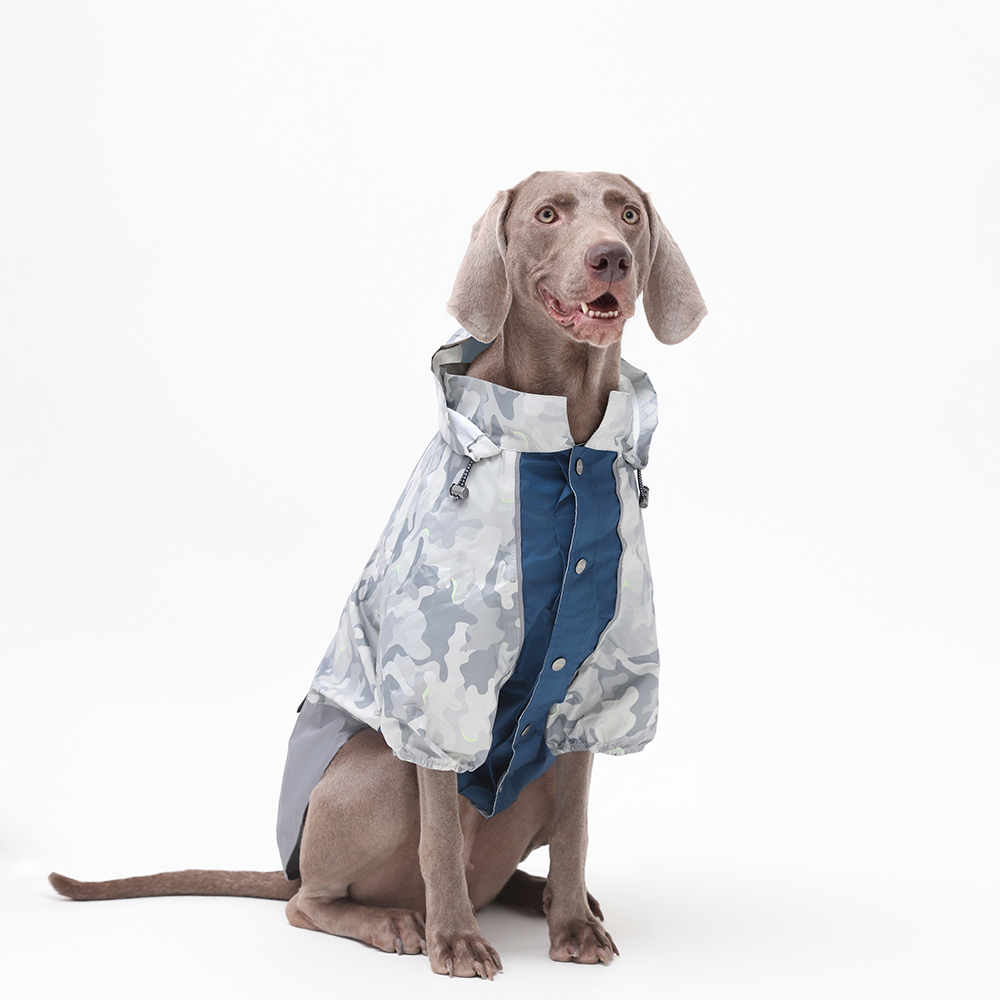
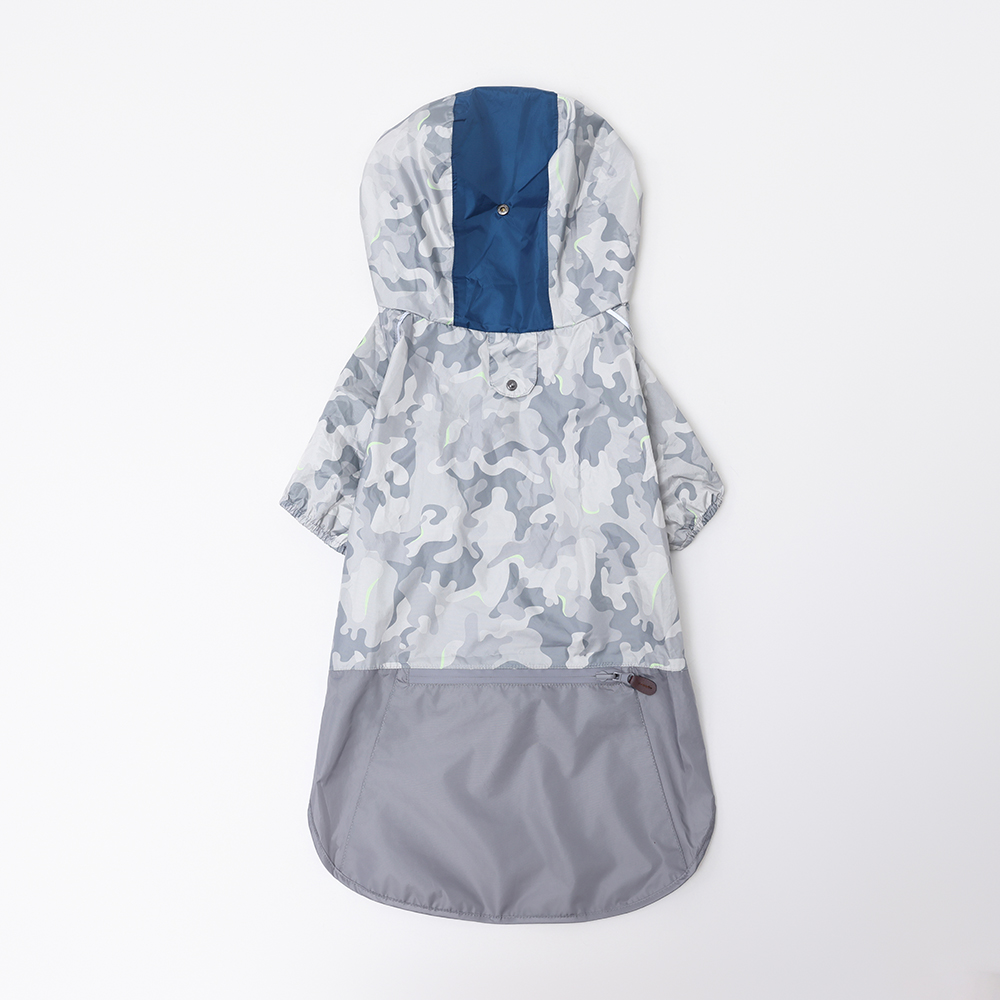
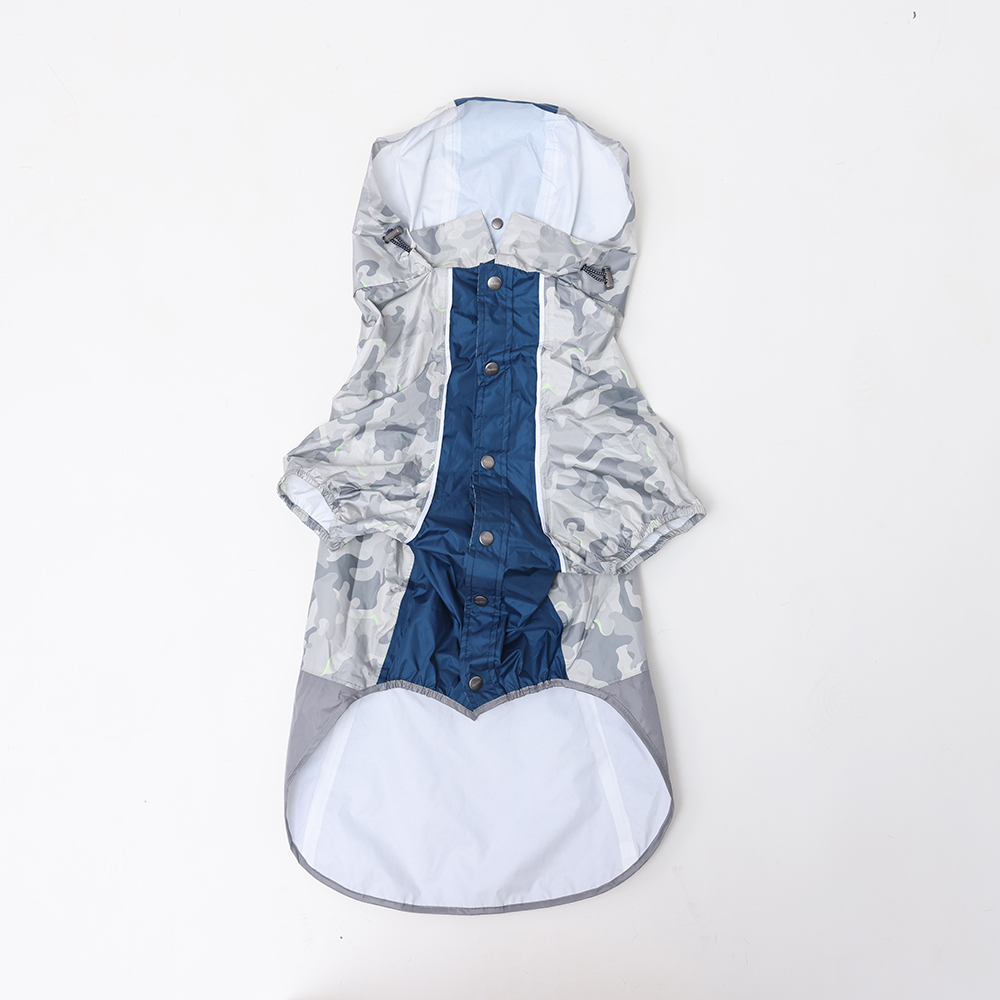
This custom waterproof and windproof dog raincoat combines extended back-and-side coverage, front-leg sleeves, a hooded collar, and snap-button fastening for wet-weather walks. Designed for private-label pet apparel programs, it can be developed with custom colors, prints, sizing, logos, labels, and retail packaging to match your market.
Product Description
We are a designated supplier for many brands. In order to develop more business with new and existing customers, we have established our own new pet Design sourcing and design department. We also have our own brands "Wan talk" and "Meow talk". 16 years of production and export experience. Maintain the habit of manual quality inspection to ensure the quality of goods. Own designers, can provide customers with satisfactory design services, 7-10 days for samples, 15-30 days for large goods, rapid response.
Description
Product Overview
This custom waterproof and windproof dog raincoat is developed for private-label pet apparel collections. Its visible design combines extended back-and-side coverage, front-leg sleeves, a hooded collar, snap-button fastening, and a color-blocked outer shell.
The raincoat is intended for wet and windy walks where a simple back cape may not provide enough side or shoulder coverage. The front sleeves help cover the upper legs, while the extended rear panel reaches over the back and upper hindquarters without enclosing the dog’s lower legs.
Colors, prints, sizing, branding, labels, packaging, and selected construction details can be developed for pet brands, retailers, distributors, and promotional programs.
Extended Weather Coverage
Back and Side Panels
The main shell follows the dog’s back from the neck toward the base of the tail. Side panels extend below the body line to reduce direct exposure to rain, wind, mud, and road splash.
The rear section is longer than the main printed body panel. This helps cover more of the lower back while leaving the tail and hind legs free.
Coverage should be reviewed on a standing and moving dog. A longer garment may offer more protection, but it should not interfere with the tail, toileting area, or hind-leg movement.
Front-Leg Sleeves
Short front-leg sleeves provide additional coverage around the shoulders and upper legs. Elasticized sleeve edges help keep the openings closer to the legs.
Sleeve width and length must be balanced carefully. Tight sleeves may restrict the dog’s stride or create friction, while excessively loose sleeves may shift during walking.
Open Underside
The underside remains partially open to preserve movement and toileting clearance. The exact belly coverage can be adjusted during pattern development according to the target dog sizes and intended market.
Hooded Collar
The raised hooded collar provides additional coverage around the neck and upper shoulder area. The photographed design includes adjustment details near the collar opening.
The hood or collar should be evaluated while the dog turns its head, lowers its nose, walks, and sits. It should not obstruct the eyes, press against the ears, tighten around the throat, or interfere with breathing.
For custom projects, the collar can be developed as:
A fixed hood
A fold-back hood
A detachable hood
A high storm collar
An adjustable collar opening
A simplified collar without loose cords
Any drawcords, toggles, snaps, or detachable components should be selected and positioned with pet safety in mind.
Snap-Button Front Closure
The raincoat uses a central front placket with snap-button fastening. This structure opens the garment along the chest and underside, allowing the dog’s front legs to be placed into the sleeves before the placket is closed.
The contrasting placket also creates a clear area for color coordination and branding.
During sample review, check:
Snap alignment
Opening and closing force
Placket overlap
Chest clearance
Pressure against the dog’s body
Resistance to pulling
Metal finish and corrosion requirements
Edge comfort around the chest and abdomen
The front overlap affects both fit and weather protection. Large gaps or distorted fastening may allow more water and wind to enter.
Waterproof Construction
Material Performance
The raincoat is designed around a waterproof and wind-resistant outer-shell requirement. Actual performance depends on the approved fabric, coating or membrane, seam construction, closures, and garment openings.
A material described as waterproof does not automatically make the finished garment waterproof. Water may still enter through needle holes, unsealed seams, the front placket, collar, sleeves, leash opening, or garment edges.
Projects with a defined waterproof claim should specify:
Fabric composition
Coating or membrane type
Water-resistance test method
Required water-column rating
Surface water-repellent finish
Seam-sealing requirement
Wash-performance requirement
Acceptance criteria for bulk production
Wind Resistance
Wind protection depends on the air permeability of the fabric and how closely the garment fits around the neck, sleeves, chest, abdomen, and rear opening.
A closer structure may reduce drafts but can also affect ventilation. Material weight, airflow, climate, dog activity, and wearing time should be reviewed together.
Seams and Openings
Seams, front fasteners, pockets, and leash or harness openings are common water-entry points. If stronger rain protection is required, covered plackets, seam tape, sealed openings, and alternative construction methods can be evaluated during development.
No finished-product waterproof rating should be published until the relevant material and construction have been confirmed.
Fit and Mobility
A functional dog raincoat should cover the body without limiting the dog’s normal stride.
Check the sample while the dog is:
Standing naturally
Walking at different speeds
Turning
Sitting
Lying down
Raising and lowering its head
Using stairs
Wearing the intended collar or harness
Pay particular attention to the shoulders, armpits, sleeve openings, chest, neck, belly, and base of the tail. These areas are more likely to experience rubbing, pressure, or restricted movement.
The coat should not twist heavily, pull backward at the neck, drag on the ground, or extend into the toileting area. Remove it if the dog shows discomfort, restricted movement, or overheating.
Dog Raincoat Sizing
Dog weight and breed name are useful references, but they are not sufficient for accurate garment sizing. Dogs of the same weight can have different chest depths, back lengths, neck sizes, and shoulder proportions.
Measurements to Collect
Back Length: Measure from the lower neck to the base of the tail.
Chest Girth: Measure around the widest part of the rib cage.
Neck Girth: Measure around the lower neck where the collar will sit.
Front-Leg Circumference: Measure where the sleeve opening will be positioned.
Chest Length: Measure the available front-placket length without entering the toileting area.
Shoulder Width: Check when developing patterns for broad-chested dogs.
Take measurements while the dog is standing. Keep the tape close to the body without pulling it tight.
Size Grading
Each size should have defined body-measurement ranges and finished-garment dimensions. The size chart must state clearly whether a number refers to the dog or the garment.
A larger size should not be created by increasing every dimension by the same percentage. Neck shape, sleeve size, chest depth, back length, and belly clearance require separate grading rules.
Wet-Weather Applications
Application
Product Consideration
Daily rainy walks
Convenient fastening and practical body coverage
Windy conditions
Stable fit and controlled garment openings
Muddy parks and paths
Washable surface and extended side coverage
Long-haired dogs
Smooth internal construction and reduced snagging
Outdoor travel
Low storage volume and manageable garment weight
Cool-weather rain
Space for an appropriate insulating layer
Low-light walking
Optional reflective or high-visibility elements
This garment is a rain shell. Unless an insulating lining is specified, it should not be presented as a cold-weather coat.
Private Label Customization
Colors and Prints
The camouflage and color-blocked design shown in the current product images can be replaced or adapted for a private-label collection.
Development options may include:
Solid colors
Custom camouflage
Seasonal prints
Geometric patterns
Brand color combinations
Contrasting plackets
Matching hood and rear panels
Custom printed shell fabric
Final color approval should be based on fabric swatches, lab dips, strike-offs, or approved samples rather than screen images alone.
Logo Application
Logo methods can include:
Woven labels
Printed logos
Heat-transfer graphics
Embroidery
Rubber or silicone badges
Branded snaps
Custom zipper pulls
Printed lining or binding
The branding method must suit the selected fabric. Embroidery and sewn-on patches create needle holes, which should be considered when waterproof performance is important.
Structural Options
Depending on the project, the pattern can be evaluated for:
Alternative sleeve lengths
Adjustable chest sections
Different hood structures
Covered front closures
Harness-access openings
Collar-leash openings
Reflective piping or panels
Additional belly coverage
Lined or unlined construction
Packable storage structures
These options are not standard unless they are included in the approved specification.
Material Development
Material selection should begin with the intended climate and retail positioning rather than appearance alone.
Shell Fabric
Review:
Fiber composition
Fabric weight
Surface texture
Flexibility
Tear resistance
Abrasion resistance
Waterproof performance
Wind resistance
Colorfastness
Print compatibility
Cleaning requirements
A stiff or noisy fabric may be unsuitable for dogs that are sensitive to movement sounds. A lighter material may improve mobility but require reinforcement in high-stress areas.
Lining
An unlined shell is lighter and better suited to mild or warm rain. A mesh or smooth lining may improve internal feel, while an insulated lining changes the product into a colder-weather garment.
Lining decisions affect weight, drying time, warmth, cost, and wash care.
Hardware and Trims
Snaps, zippers, toggles, elastic, reflective materials, labels, and decorative components should be checked for:
Attachment strength
Corrosion resistance
Edge smoothness
Wash durability
Color consistency
Small-component risk
Compatibility with the shell fabric
OEM and ODM Process
1. Submit the Product Brief
Provide the reference design, target sizes, materials, colors, logo, packaging, quantity, destination market, and performance requirements.
2. Review Construction
The design and sourcing teams review the pattern, fabric, trims, closures, branding method, and testing needs.
3. Confirm Materials
Available fabrics and trims are presented for selection. Custom colors or prints may require separate sampling and minimum quantities.
4. Develop the Pattern
The pattern is created or adjusted using the approved measurements and required coverage.
5. Produce the Sample
Sample development is generally planned for 7–10 days after the required materials and design information are available. Complex fabrics, custom hardware, or printed materials may require additional time.
6. Conduct a Fitting Review
Check the sample on representative dogs for size, coverage, sleeve movement, hood position, fastening, and walking compatibility.
7. Approve the Specification
Confirm the material, color, dimensions, workmanship, logo, labeling, packaging, testing, and inspection criteria.
8. Begin Bulk Production
The published production period is generally 15–30 days after order and specification confirmation. Actual timing depends on quantity, material availability, customization, production scheduling, and inspection requirements.
Quality Control
WANTALK states that manual inspection is used as part of its quality-control process. For a custom dog raincoat order, the inspection plan should be tied to the approved sample and specification.
Checks may include:
Fabric identity and surface condition
Print and color consistency
Finished garment measurements
Size-label accuracy
Sleeve symmetry
Hood and collar alignment
Front-placket alignment
Snap placement and operation
Zipper operation
Stitch consistency
Loose threads
Seam appearance
Logo position
Hardware attachment
Sharp edges or loose components
Packaging and carton markings
When waterproof performance is part of the order, the required fabric or finished-garment test method should be agreed before production.
Product Information
Item
Description
Product Type
Dog raincoat
Design
Hooded, sleeved rain jacket
Weather Function
Waterproof and wind-resistant performance according to the approved specification
Visible Coverage
Neck, shoulders, back, sides and upper front legs
Closure
Front snap-button placket
Rear Design
Extended back panel with a visible zippered detail
Sleeve Edge
Elasticized front-leg openings
Current Appearance
Gray camouflage, navy placket and gray rear panel
Material
To be confirmed according to the approved order
Size Range
Standard or custom sizing subject to confirmation
Logo
Private-label options available
Packaging
Standard or custom packaging
Service
OEM, ODM and OBM
Sample Time
Generally 7–10 days, subject to project requirements
Bulk Production
Generally 15–30 days after approval, subject to order conditions
Care and Storage
Care instructions must be matched to the approved shell, coating, lining, print, and hardware.
General precautions include:
Close snaps and zippers before washing
Remove surface mud before cleaning
Use a mild detergent
Avoid bleach unless the material specification permits it
Avoid fabric softener on functional coated fabrics
Do not use high heat unless approved
Air-dry the garment completely
Store it clean and dry
Inspect fasteners and seams regularly
High temperatures, aggressive chemicals, abrasion, and unsuitable washing methods may reduce water resistance or damage printed and bonded surfaces.
Manufacturing Support
WANTALK provides pet apparel development, sourcing, sampling, production, inspection, and export-order support. The company offers OEM, ODM, and OBM services and has internal purchasing and design functions.
Project support is available for:
Product and pattern development
Fabric and trim sourcing
Private-label branding
Size-range development
Custom prints and colors
Sampling
Bulk production
Manual product inspection
Retail packaging
Export coordination
WANTALK reports BSCI and Disney factory audits. Buyers can request current audit, test, or company documents and review their validity, scope, issuing body, and applicable product category before relying on them.
Frequently Asked Questions
Is waterproof the same as water-resistant?
No. These terms normally represent different performance levels. The appropriate claim should be based on the selected material, construction, test method, and measured result.
Does this raincoat keep a dog warm?
Not automatically. A waterproof shell mainly provides a barrier against rain and wind. Warmth depends on the lining, fabric weight, layering, activity level, and outside temperature.
Can the pattern be adjusted for different dog breeds?
Yes. Patterns can be developed around the chest depth, back length, neck size, shoulder width, and leg proportions of the intended breed group. Representative measurements are required.
Can the raincoat be worn over a harness?
Harness compatibility depends on the garment volume and the position of the attachment point. A covered harness opening can be developed when included in the specification.
Can the back zipper be used as a storage pocket?
The photographed product has a visible zippered back detail, but its intended function should be confirmed before it is described as a pocket or packable storage structure.
Can reflective details be added?
Yes. Reflective piping, tape, panels, or prints can be evaluated. Required visibility performance and test standards should be specified before material selection.
Can buyers use their own fabric?
Customer-nominated fabric may be reviewed for construction suitability, availability, minimum quantity, waterproof performance, colorfastness, wash behavior, and production compatibility.
What artwork is needed for a custom print or logo?
Vector artwork is preferred for logos. Repeating prints should include the pattern repeat, scale, color references, placement requirements, and print method when known.
Can custom care labels and barcodes be supplied?
Yes. Private-label orders can include brand labels, size labels, care labels, hangtags, barcodes, SKU information, and retail packaging based on approved files.
How can fit problems be reduced before production?
Develop a complete size chart, measure representative dogs, conduct movement-based fittings, and approve a size-set or pre-production sample before bulk production.
Can different sizes and colors be combined in one order?
This depends on the fabric, print process, color minimums, size breakdown, and total order quantity. The proposed assortment should be submitted for production review.
What information is required for a quotation?
Provide the design or Tech Pack, target size range, material requirements, colors, print, logo method, packaging, quantity, destination, testing requirements, and requested delivery date.
OEM & ODM Dog Rainwear
Develop a Private-Label Dog Raincoat for Your Market
Send us your target sizes, preferred shell fabric, waterproof requirement, sleeve and hood design, colors, logo artwork, packaging, and estimated quantity. Our team will review the construction and prepare a sample-development proposal.