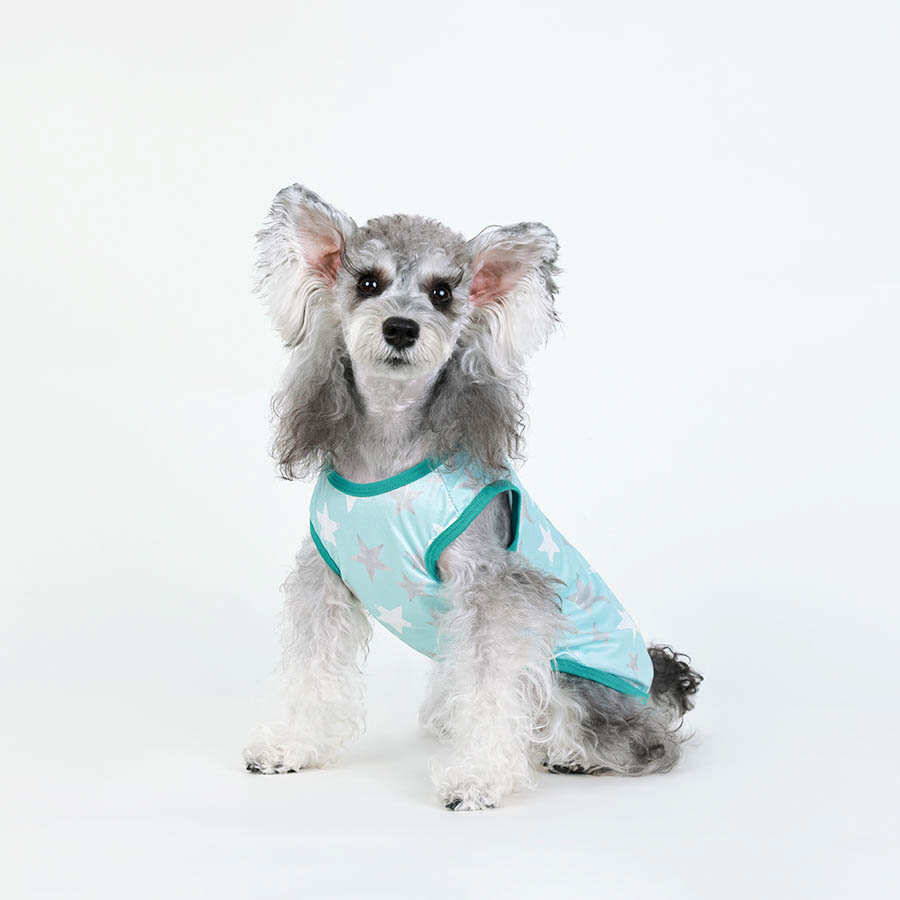
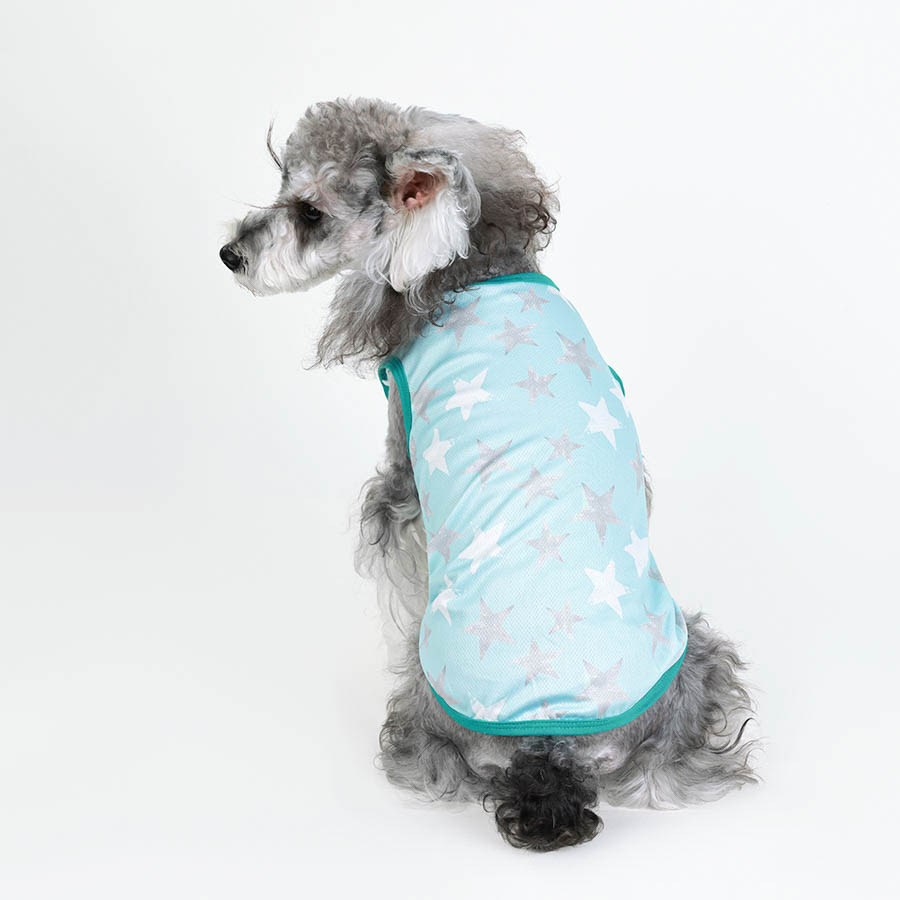
Designed for warm-weather pet apparel collections, this breathable nylon dog cooling vest features a lightweight sleeveless cut, contrast trim, and a customizable star pattern. It covers the dog’s chest and back while keeping the legs free, making it suitable for pet retailers, e-commerce brands, seasonal collections, and private-label programs.
Description
A Lightweight Summer Vest for Dogs
This dog cooling vest features a light aqua-blue body, turquoise contrast trim, and a white star pattern. The simple color combination gives the garment a fresh seasonal appearance that can be displayed in summer pet clothing collections.
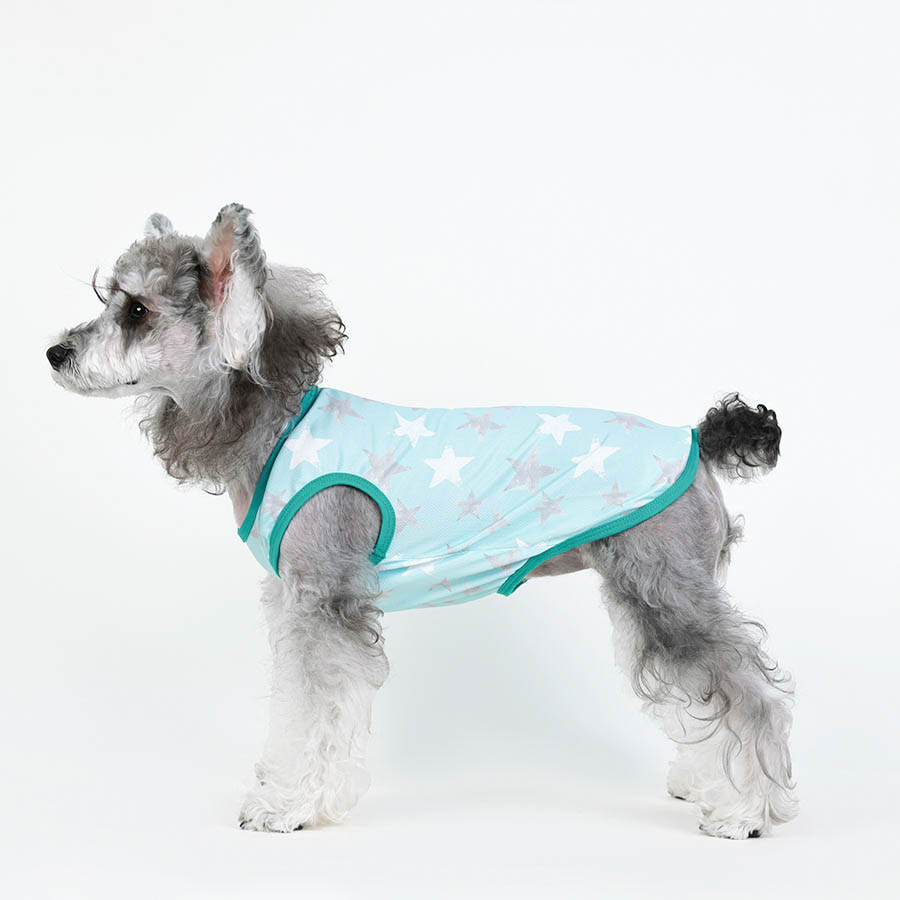
Unlike a full dog coat, the sleeveless vest leaves the legs uncovered and uses a more open lower-body profile. This creates a lighter apparel format for daily walks, travel, outdoor activities, and warm-weather retail programs.
The design also provides a practical starting point for customized pet clothing. Brands can retain the star pattern or develop new artwork, color combinations, labels, and packaging according to their target market.
Clean Contrast-Color Design
The contrast binding around the neckline, armholes, and lower edge adds definition to the vest. It also creates a clear visual separation between the main fabric and the trim, helping the product stand out on a retail display or online product page.
Sleeveless Construction
The sleeveless shape allows the dog’s front legs to move freely. The vest focuses coverage on the chest and back while keeping the overall design less bulky than a full-body coat.
Suitable for Seasonal Pet Collections
The blue-and-star design can fit summer campaigns, holiday promotions, pet boutique collections, online pet stores, and private-label apparel ranges. The pattern can also be adapted for different brand styles, customer groups, or seasonal color themes.
Breathable Nylon Fabric and Vest Construction
The product is made with nylon fabric and is positioned as breathable summer pet apparel. Nylon provides a smooth surface suitable for lightweight garment construction, while the final hand feel, fabric weight, weave, and air permeability depend on the material specification selected for production.
Lightweight Nylon Fabric
A lightweight nylon fabric helps maintain the slim appearance of the vest. It is suitable for brands that want to add a warm-weather dog clothing item without using the heavier construction normally associated with winter coats.
The final fabric should be selected according to the intended market, target price, color requirements, pattern quality, and care expectations. Sample approval allows buyers to evaluate the actual texture, weight, flexibility, and appearance before bulk production.
Open Sleeveless Profile
The vest leaves the dog’s legs uncovered and provides coverage across the main body. This design can be easier to wear than garments with full sleeves, especially for dogs that are not accustomed to restrictive clothing.
The armhole shape should provide enough space for movement without creating excessive looseness. The neckline, chest area, lower edge, and trim should all be checked during fitting.
Contrast Binding
The turquoise binding gives the vest a finished edge around the neckline, armholes, and hem. Proper binding construction helps improve visual consistency and reduces the unfinished appearance of raw fabric edges.
For bulk orders, buyers can review the width, color, softness, and placement of the binding together with the main fabric and pattern artwork.
Star Pattern
The star pattern shown on the sample creates a recognizable summer look. It can be retained as a signature design or used as a reference for developing alternative artwork.
Custom pattern development may include changes to the star shape, size, spacing, color, repeat direction, or overall placement. Artwork should be reviewed for scale and production suitability before final approval.
Product Specifications
Item
Description
Product type
Summer dog cooling vest
Main fabric
Nylon
Construction
Sleeveless dog vest
Color shown
Light aqua-blue with turquoise contrast trim
Pattern shown
White or silver star pattern
Coverage
Dog chest and back
Lower profile
Open design around the lower body
Seasonal use
Warm-weather pet apparel
Custom options
Pattern, colors, size range, labels, and packaging
Target customers
Pet brands, wholesalers, retailers, distributors, and e-commerce sellers
The shown product represents a summer dog vest design for customized development. The final production specification should be based on the approved sample, including fabric, color, artwork, measurements, labels, and packaging details.
Dog Vest Fit and Size Planning
A comfortable fit is important for both product performance and customer satisfaction. Breed name alone is not enough to select a size because dogs with similar weight may have different chest shapes, neck sizes, and back lengths.
Measure the Neck
Measure around the base of the dog’s neck, where the collar normally rests. Keep the measuring tape close to the body without pulling it tightly. The neckline should sit securely while allowing comfortable movement.
Measure the Chest
Measure around the widest part of the chest, normally just behind the front legs. This measurement is often the most important reference when selecting a dog vest size.
The chest opening should not press into the dog’s body. At the same time, excessive looseness may cause the vest to shift during walking.
Measure the Back Length
Measure from the base of the neck to the beginning of the tail. This helps determine whether the vest provides suitable back coverage without extending too far toward the tail.
Develop a Graded Size Range
For wholesale or private-label programs, a size range can be developed for different breed groups and customer preferences. The size chart should include finished garment measurements as well as recommended dog measurements.
Before bulk production, fitting samples can be checked on representative dogs or compared against agreed measurement standards. Particular attention should be paid to the neckline, chest, armholes, lower hem, and overall body length.
Warm-Weather Use and Care
This product is best presented as a lightweight, breathable summer dog vest. It can be used for everyday walks, outdoor events, travel, pet photography, and seasonal retail collections.
Putting on the Vest
Place the vest over the dog’s head and guide the front legs through the armhole area if required by the final construction. Smooth the fabric across the chest and back, then check that the neckline and lower edge are sitting correctly.
The dog should be able to walk, sit, lie down, and turn without obvious restriction. Remove the vest if the dog shows signs of discomfort, overheating, excessive scratching, or limited movement.
Suitable Usage Conditions
The vest can be used as warm-weather pet clothing, but it should not replace shade, drinking water, ventilation, or appropriate supervision. Dogs may react differently to heat, humidity, and outdoor activity, so use should be adjusted to the individual animal and environment.
Functional Positioning
The design should not be marketed as a medical cooling device, life jacket, safety harness, or temperature-control product. The shown vest does not specify an ice pack, gel insert, water-activated layer, or electronic cooling component.
If a buyer requires evaporative cooling, gel pockets, reflective treatment, UV protection, or other performance features, those should be developed as separate product requirements with suitable material selection and testing.
Care Guidelines
The final care label should match the approved fabric and production construction. As a general starting point, gentle washing and low-temperature drying are more appropriate for printed nylon pet apparel than aggressive heat or harsh chemical treatment.
Buyers should test the fabric, pattern, trim, and label instructions together before approving bulk packaging. This helps ensure that the care information matches the actual product delivered to customers.
Custom Pattern, Color, and Branding Options
The star-pattern design provides a flexible base for private-label development. Customization can focus on the visual appearance, garment fit, brand identity, and retail presentation.
Custom Pattern Artwork
Brands can provide their own pattern artwork or request adjustments to the existing star theme. Artwork review may include:
Pattern scale and repeat
Positioning on the front and back panels
Color count and contrast
Artwork clarity at different garment sizes
Compatibility with the selected fabric
A sample should be used to review the final visual effect because the same artwork may appear different when applied to different fabric colors or garment sizes.
Color Combinations
The main fabric and contrast binding can be developed in different color combinations. Buyers may provide brand colors, seasonal references, Pantone references, or physical samples as a starting point for color development.
The final production color should be judged against an approved physical sample and agreed production standard.
Size and Fit Adjustments
The vest can be developed around the target size range of a brand or retailer. Adjustments may include body length, chest width, neckline, armhole shape, trim width, and lower hem position.
Any adjustment should be reviewed through a sample because changes to one measurement may affect the balance of the complete garment.
Private-Label Elements
For branded programs, buyers can discuss the use of brand labels, size labels, care labels, hangtags, and customized packaging. Wantalk’s custom pet clothing service supports the development of product presentation details for different order requirements.
OEM and ODM Development Process
A clear development process helps buyers control product details before committing to seasonal inventory.
Share the Product Brief
The initial brief may include:
Target dog size range
Intended sales market
Expected order quantity
Main fabric preference
Color references
Pattern or artwork files
Brand label requirements
Packaging requirements
Sample quantity and fitting needs
The more complete the brief, the easier it is to assess the garment structure and prepare a suitable sample.
Review the Sample
The sample allows the buyer to inspect the fabric hand feel, garment proportions, pattern placement, trim quality, and overall appearance. Fitting should be performed with dogs that represent the intended customer group.
The sample stage is also suitable for checking whether the neckline, chest, armholes, and lower hem remain comfortable during movement.
Approve Production Details
Before bulk production, the key product details should be organized into one agreed specification. This may include:
Approved fabric
Approved colors
Pattern artwork
Size chart
Label artwork
Packaging method
Carton marks
Inspection requirements
This reduces the risk of differences between the sample and the finished order.
Production and Inspection
Production quality can be reviewed through material checks, cutting accuracy, sewing workmanship, trim placement, pattern consistency, measurements, labeling, and packing accuracy.
A written inspection checklist is especially useful when the order contains multiple sizes, colors, patterns, or packaging configurations.
Quality Checks for Nylon Dog Cooling Vests
A reliable quality process should examine both appearance and usability. For this vest, the following points are particularly important.
Fabric and Color Consistency
The nylon fabric should be checked for consistent color, surface defects, stains, and visible irregularities. The main fabric and contrast trim should maintain the intended color relationship across the size range.
Stitching and Edge Finishing
Seams should be checked for skipped stitches, loose threads, uneven tension, and open sections. Binding should sit evenly around the neckline, armholes, and lower edge.
Pattern Placement
The star pattern should be reviewed for clarity, spacing, repeat consistency, and alignment. Different garment sizes may display the pattern differently, so placement should be checked across representative samples.
Measurement Control
Finished garment measurements should be compared with the approved size chart. Important points include chest width, back length, neckline, armhole opening, and lower hem.
Labels and Packing
Each size, color, label, and package should be matched with the order specification. Carton quantities and shipping marks should also be checked before shipment preparation.
Wholesale Planning for Summer Pet Collections
This dog cooling vest can be introduced as a seasonal product, a private-label basic, or part of a wider pet apparel range.
Retail Assortments
Pet retailers may combine core sizes with several color or pattern options. A simple assortment can make the product easier to display while allowing customers to choose according to dog size and personal style.
E-Commerce Listings
Online product pages should clearly state the fabric, garment type, fit, pattern, size information, care instructions, and intended use. Avoid describing the vest as waterproof, medical, or actively cooling unless those functions have been specifically developed and tested.
Clear product photography should show the front, back, trim, pattern, and fit on a dog. A flat-lay image can also help customers understand the garment shape.
Seasonal Promotions
The star pattern and contrast-color design can support summer campaigns, pet event promotions, holiday collections, and limited-edition product launches. Custom artwork can help brands create a more distinctive product range.
Order Forecasting
Seasonal orders should account for sample approval, artwork development, size grading, production, inspection, and shipment preparation. Early planning gives buyers more time to review product details before the selling season begins.
Packaging and Private-Label Presentation
Packaging affects how a pet garment is stored, shipped, displayed, and presented to the end customer.
Depending on the program, buyers can discuss individual packing, size identification, brand labels, care information, hangtags, customized bags, cartons, and retail-ready packaging.
The packing specification should match the sales channel. For e-commerce, packaging should protect the garment while controlling unnecessary volume. For retail shelves, the package should present the product name, size, care information, and brand identity clearly.
Before shipment, the package artwork, label placement, product quantity, and carton marks should be checked against the approved order details.
Why Work with Wantalk
Wantalk has a pet-product manufacturing background dating back to 2008 and supports OEM, ODM, and OBM development for pet clothing and accessories.
For this nylon dog cooling vest, the development scope can cover the garment design, pattern, color combination, size range, private-label elements, and packaging. This gives pet brands and wholesalers a practical way to build a product around their own market requirements.
Can the star pattern be replaced with my own artwork?
Yes. The star pattern can be retained, adjusted, or replaced with new artwork. Pattern scale, placement, color, and production suitability should be reviewed during sample development.
Can this dog vest be made in other colors?
Yes. The main fabric and contrast trim can be developed in different color combinations. Brand color references or physical samples can be used as a starting point for color matching.
Can I request a sample before placing a bulk order?
A sample is recommended for checking fabric feel, fit, color, pattern placement, edge finishing, labels, and packaging. The approved sample can then be used as the reference for bulk production.
Is this product waterproof?
The product is listed as a nylon dog vest, but waterproof performance is not specified. It should not be marketed as waterproof unless a suitable fabric finish has been developed and tested separately.
Does the vest include an ice pack or gel cooling insert?
The shown design does not specify an ice pack, gel insert, or water-activated cooling layer. It should be treated as lightweight summer pet apparel unless additional cooling functionality is developed as part of a separate specification.
Can the vest be produced for cats?
The design is primarily developed as a dog vest. Cat versions may require separate measurements and fitting samples because cats have different body proportions and movement patterns.
What information is needed for a quotation?
Useful information includes the target quantity, size breakdown, fabric preference, color references, artwork, label requirements, packaging method, destination market, and sample expectations.
Can I add my own brand label and packaging?
Yes. Brand labels, size labels, care labels, hangtags, bags, boxes, and shipping cartons can be discussed as part of a private-label order.
How should I select the size range for a seasonal launch?
Review your customer data, target breed groups, and expected sales channels. A practical size range should be based on neck, chest, and back measurements rather than weight alone.
Custom Pet Apparel OEM / ODM
Develop Your Summer Dog Cooling Vest Collection
Send us your artwork, color references, target sizes, quantity, and packaging requirements. Wantalk can help develop a summer nylon dog vest for your brand.