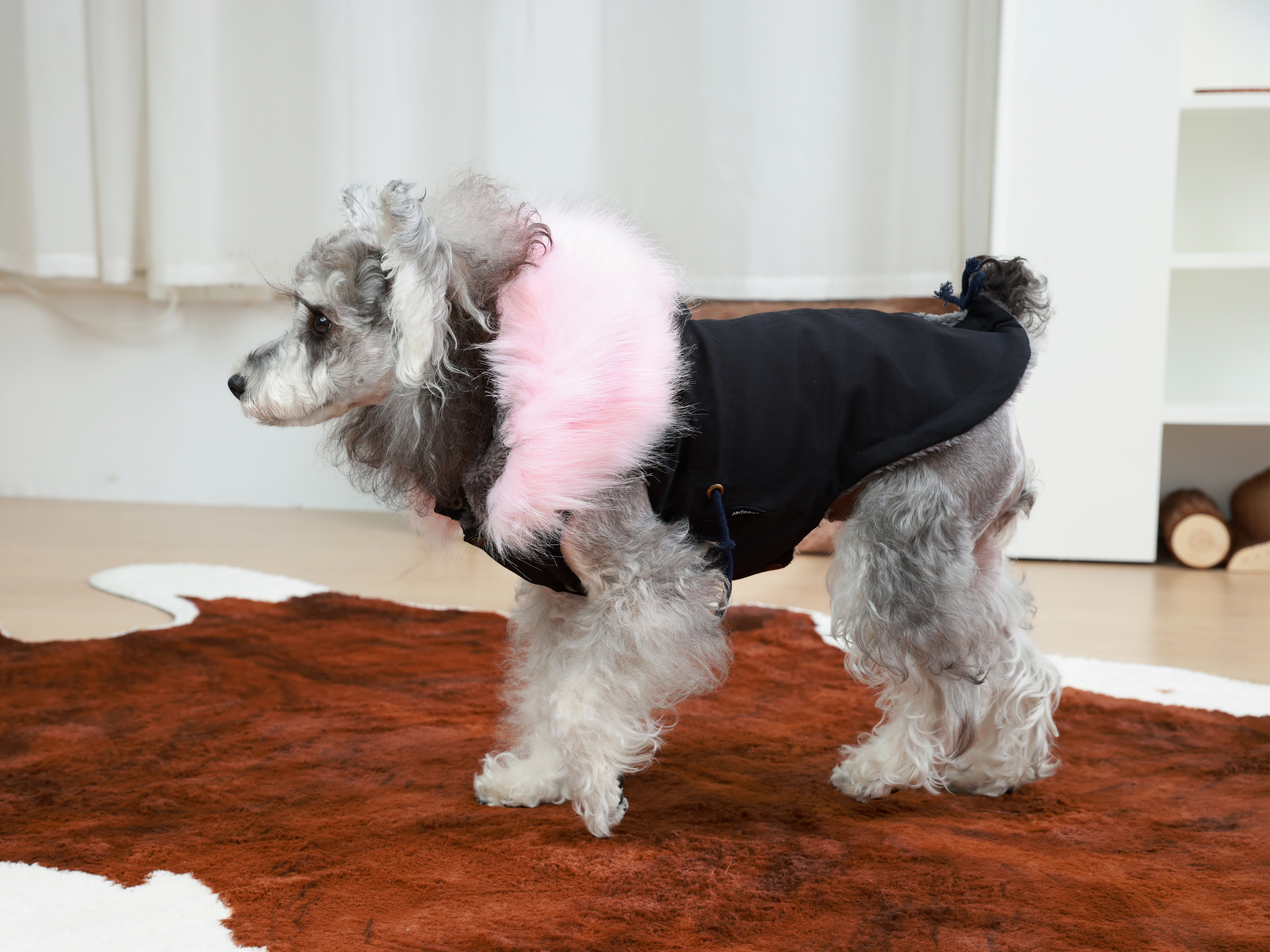
This waterproof fleece-lined hooded dog winter coat combines a weather-resistant outer shell, soft plush lining, snap-button front, adjustable drawcords, and a pink-trimmed hood for cold-weather walks. WANTALK supports custom colors, materials, sizing, labels, logos, packaging, sampling, and bulk production for private-label pet apparel programs.
Description
Product Overview
This waterproof fleece-lined hooded dog winter coat is designed for cold-weather walks and private-label pet apparel programs. The design combines a black outer shell, soft grey plush lining, a pink-trimmed hood, front snap buttons, and adjustable drawcords around the body and rear hem.
The outer fabric helps reduce direct exposure to light rain, snow, wind, and road splash. Inside, the plush lining adds a soft insulating layer around the dog’s back, sides, chest, and neck.
WANTALK supports custom materials, colors, lining options, size grading, labels, logos, hangtags, and retail packaging for pet brands, distributors, and retailers.
Fleece-Lined Warmth
Plush Interior
The grey plush lining covers the inside of the body and hood. It creates an insulating layer between the dog and the outer shell while providing a soft surface against the coat.
Actual warmth depends on:
Lining material and weight
Outer-shell construction
Garment coverage
Chest and neck fit
Wind exposure
Outdoor temperature
Length of wear
The dog’s size, breed, age, coat type, and activity level
The lining should be specified by fiber content, fabric weight, pile structure, and color rather than described only as “thickened.”
Warmth Without an Unsupported Rating
There is no single temperature rating suitable for every dog. Small dogs, short-haired breeds, lean dogs, puppies, senior dogs, and dogs accustomed to warmer climates may require additional protection sooner than large, thick-coated breeds.
A temperature claim should only be published when supported by a defined test method and use conditions.
Moisture Management
Plush lining can absorb moisture from wet fur, snow, or washing. The coat should be dried completely before storage or repeated use.
A damp lining may feel cold against the dog and can develop odor if stored without adequate ventilation.
Waterproof Outer Shell
The outer fabric is intended for wet-weather use. However, the performance of the complete coat depends on more than the shell material.
Fabric Performance
The approved material specification should identify:
Fiber composition
Fabric weight
Coating or membrane
Water-repellency treatment
Hydrostatic-pressure rating, if tested
Breathability, if tested
Abrasion resistance
Colorfastness
Care method
“Waterproof,” “water-resistant,” and “water-repellent” should not be treated as interchangeable terms. The appropriate claim should reflect the available test data.
Finished-Garment Construction
Water may enter through:
Sewing needle holes
Unsealed seams
Snap-button openings
Hood edges
Chest and belly openings
Drawcord eyelets
Tail and rear openings
Projects requiring stronger rain or snow protection should specify whether seam sealing, covered plackets, coated components, or alternative construction methods are required.
Intended Exposure
The coat is suitable for supervised outdoor wear under conditions covered by the approved specification. It should not be presented as immersion equipment or as keeping every dog completely dry during unlimited exposure.
Hood and Plush Trim
The hood extends coverage around the neck and head. Its pink plush trim provides a distinctive winter appearance and adds a soft edge around the opening.
The hood should be checked to ensure that it does not:
Obstruct the dog’s eyes
Press against the ears
Restrict head movement
Tighten around the throat
Interfere with breathing
Create loose trim within chewing reach
Conflict with a collar or harness
The plush trim’s fiber content, pile length, colorfastness, shedding performance, and attachment strength should be included in the approved specification.
Fixed, removable, fold-back, and alternative hood styles may be developed for custom orders.
Adjustable Fit
Drawcords are positioned around the sides and rear of the coat. They allow the garment shape to be adjusted around the body and tail area.
Side Adjustment
Side drawcords can help control excess fabric around the chest and waist. Adjustment should be even on both sides so that the coat remains centered.
The garment must still allow:
Full chest expansion
Natural front-leg movement
Sitting and lying down
Turning and bending
Comfortable toileting
Rear-Hem Adjustment
The rear drawcord helps control the opening near the tail and hindquarters. It should not pull the coat too tightly against the tail or cause the back panel to lift.
Cord Safety
Cord ends, knots, eyelets, and stoppers should be assessed for:
Attachment strength
Maximum exposed length
Chewing risk
Snagging risk
Small-component requirements
Resistance to repeated adjustment
Dogs should not be left unattended while wearing garments with drawcords or removable components.
Snap-Button Closure
A center-front panel with multiple snap buttons secures the coat around the chest and underside. Opening the front panel provides access for dressing and removal.
The closure should be checked for:
Correct alignment
Consistent spacing
Suitable pull strength
Smooth component edges
Corrosion resistance
Secure attachment
Pressure against the chest
Compatibility with the lining thickness
Snaps should open without requiring excessive force, but they must remain closed during normal walking and body movement.
Component material, finish, color, size, and performance requirements should be recorded before bulk production.
Body Coverage
Back and Side Protection
The coat extends from the neck across the back and toward the base of the tail. Side panels provide additional coverage around the torso while leaving the legs free.
The rear hem is divided around the tail area so that the garment can follow the dog’s body without enclosing the hind legs.
Chest Coverage
The front panel covers part of the chest and underside. Its length and width should be matched to the intended dog sizes and adjusted for male and female fit where necessary.
Open-Leg Design
The sleeveless structure avoids fabric around the legs and shoulders. This can simplify dressing and support a natural stride when the neck, chest, and body dimensions are correct.
Fit and Mobility
A winter coat should provide enough room for the lining without becoming loose enough to twist or shift.
Check the sample while the dog is:
Standing naturally
Walking at different speeds
Sitting
Lying down
Turning
Lowering its head
Climbing a step
Wearing the intended collar or harness
Pay particular attention to the neck, chest, front-leg openings, underside, drawcords, tail opening, and snap placket.
Signs that the fit requires adjustment include restricted stride, pressure around the neck, rubbing behind the front legs, twisting, gaping, or interference with toileting.
Dog Winter Coat Sizing
Dog weight and breed name are useful references, but they do not replace body measurements.
Required Measurements
Measure the dog while it is standing:
Back Length: From the base of the neck to the base of the tail.
Chest Girth: Around the widest part of the rib cage.
Neck Girth: Around the lower neck where the coat will sit.
Belly Length: Along the underside to determine closure placement.
Shoulder Width: Across the upper body.
Tail Position: Check the space required around the rear opening.
Use a flexible measuring tape without pulling it tightly against the body.
Wearing Ease
The size chart should distinguish between body measurements and finished-garment measurements. The pattern must include enough room for the plush lining, chest expansion, and normal movement.
If the coat is intended to be worn over another layer, this must be included in the fitting process.
Private-Label Size Grading
A private-label size range should be based on representative dogs from the target market. Enlarging every pattern point by the same percentage can distort the neck, chest, underside, and rear opening.
Cold-Weather Applications
Daily Winter Walks
The coat provides additional body coverage during cold outdoor walks. Actual comfort depends on the dog, weather, walking pace, and exposure time.
Light Rain and Snow
A suitable shell can help reduce contact with light rain, wet snow, and road splash. Finished performance remains dependent on the seams, openings, and approved material.
Windy Conditions
The outer layer and lining can help reduce direct wind exposure around the torso. Correct neck, chest, and rear adjustment is important in exposed locations.
Outdoor Travel
The coat may be used during winter car trips, holidays, or visits to colder areas. Remove it inside heated vehicles or buildings if the dog becomes too warm.
Short-Haired and Small Dogs
Dogs with limited natural insulation may benefit from an additional outer layer in cold conditions. Fit, activity level, health, and individual behavior should always be considered.
Cold-Weather Use
Not every dog requires a winter coat. Thick-coated breeds may remain comfortable in conditions where small, short-haired, lean, young, senior, or less active dogs need additional protection.
Observe the dog throughout use. Remove or adjust the coat if the dog shows:
Persistent panting
Restlessness
Reluctance to move
Restricted movement
Excessive scratching
Dampness beneath the coat
Pressure or rubbing
Attempts to remove the garment
A dog winter coat protects only the covered body area. It does not protect paws from ice, sharp surfaces, or deicing chemicals.
Custom Dog Winter Coat Options
WANTALK provides OEM, ODM, and private-label development for pet apparel programs.
Shell Options
Projects may specify:
Coated woven fabrics
Water-resistant shell materials
Wind-resistant materials
Lightweight or more structured shells
Solid colors
Printed fabrics
Recycled material options
Specified waterproof-performance levels
Lining and Insulation
Available development directions may include:
Short-pile fleece
Plush lining
Sherpa-style lining
Smooth lining
Quilted insulation
Synthetic fill
Different lining weights
Contrast interior colors
Natural down or feather filling should only be specified when its composition, fill power, cleanliness, sourcing, labeling, and test requirements have been confirmed.
Hood and Trim
Custom options may include:
Alternative plush-trim colors
Fixed or removable trim
Fixed or detachable hood
Fold-back hood
High-collar construction
Reduced-pile trim
Drawcord or elastic adjustment
Closures and Walking Features
Projects may evaluate:
Snap buttons
Hook-and-loop closures
Buckles
Zippers
Adjustable belly panels
Collar-leash openings
Harness-access openings
Reflective piping
High-visibility panels
These options are subject to pattern feasibility, material availability, sampling, testing, and order quantity.
Private-Label Branding
Branding may be added through:
Woven labels
Printed labels
Heat-transfer logos
Embroidery
Screen printing
Rubber or silicone badges
Branded snap buttons
Custom zipper pullers
Hangtags
Size and care labels
The application method should suit the outer fabric and lining. Heat, needles, adhesives, and printing processes may affect coated materials or waterproof performance.
Provide vector artwork, logo dimensions, color references, and placement instructions for review.
Custom Packaging
Packaging options may include:
Branded polybags
Paper sleeves
Retail boxes
Hangtags
Size stickers
Barcodes
Measuring guides
Care instructions
Multilingual labels
E-commerce packaging
Custom carton marks
Fiber content, country of origin, importer details, care symbols, safety warnings, and other mandatory information should follow the destination market’s requirements.
OEM and ODM Process
1. Submit the Product Brief
Provide reference images, target sizes, shell and lining requirements, hood design, trim color, closures, branding, packaging, quantity, and destination market.
2. Review Materials
The team reviews shell fabrics, fleece or plush lining, trim, snaps, drawcords, labels, and packaging materials.
3. Develop the Pattern
The pattern is prepared or adjusted around the required coverage, dog measurements, lining thickness, hood structure, and closure position.
4. Produce a Sample
A sample is prepared for appearance, construction, measurement, and fitting review. WANTALK lists a typical sample lead time of 5–7 days, subject to material availability and design complexity.
5. Conduct a Fitting Test
Evaluate neck position, chest fit, back length, hood placement, drawcord adjustment, tail clearance, and movement on representative dogs.
6. Approve the Specification
Confirm the bill of materials, measurements, tolerances, colors, artwork, workmanship, labeling, testing, and packaging.
7. Begin Bulk Production
Production proceeds according to the approved sample and signed specification. Lead time depends on material preparation, quantity, customization, testing, and production scheduling.
8. Inspect and Ship
Finished coats are inspected, packed, and prepared for the agreed shipping method.
Quality Control
Material Inspection
Check:
Shell identity and color
Lining weight and pile
Plush-trim color and shedding
Coating or membrane condition
Snap-button finish
Drawcord and eyelet specifications
Labels and packaging artwork
In-Process Inspection
Monitor:
Pattern orientation
Seam allowance
Lining attachment
Hood symmetry
Trim distribution
Closure alignment
Drawcord placement
Reinforcement at stress points
Logo position
Finished measurements
Final Inspection
Review:
Appearance and cleanliness
Size-label accuracy
Snap-button operation
Cord attachment
Sharp edges
Loose components
Trim shedding
Seam condition
Measurement tolerances
Packaging quantity
Carton information
Waterproof, colorfastness, component-strength, chemical, and other tests should follow the agreed order specification and destination-market requirements.
Product Information
Item
Description
Product Type
Dog winter coat
Design
Hooded, fleece-lined body coat
Outer Function
Wet- and cold-weather protection according to the approved material and construction
Interior
Grey plush or fleece-style lining
Hood Trim
Pink plush trim
Visible Closure
Center-front snap buttons
Adjustment
Side and rear drawcords
Coverage
Neck, chest, back and sides
Standard Appearance
Black outer shell with grey lining and pink hood trim
Material Composition
Defined by the approved order specification
Size Range
Standard or custom size grading
Branding
Custom labels, logos, hangtags and packaging
Business Service
OEM, ODM, OBM and private-label production
Intended Season
Autumn and winter
Intended Use
Cold-weather walks, light rain, light snow and outdoor travel
Care and Storage
Final care instructions must reflect the approved shell, lining, trim, coating, hardware, and branding method.
General precautions include:
Fasten snaps before washing
Loosen and secure drawcords
Remove surface dirt before cleaning
Use a mild detergent
Avoid bleach unless specifically permitted
Avoid high-temperature washing
Do not iron coated fabric unless approved
Dry the lining and trim completely
Store the coat in a ventilated area
Avoid compressing plush trim for extended periods
Inspect snaps, cords, seams, and trim regularly
Aggressive washing, high heat, unsuitable chemicals, and repeated abrasion may affect the shell finish, lining, trim, and components.
Manufacturing Support
WANTALK provides OEM manufacturing, ODM product development, custom branding, packaging, sampling, bulk production, quality inspection, and global shipping support for pet apparel programs.
The company reports more than 18 years of manufacturing experience and supports pet brands in over 30 countries. Factory audit, management-system, and test documents can be provided for review according to their current scope and validity.
Frequently Asked Questions
Is this coat filled with natural down?
The available product information does not establish natural down or feather content. Filling should be described according to the approved bill of materials rather than the original promotional title.
Is the dog coat reversible?
A reversible version requires finished construction that is suitable on both sides, including clean seams, reversible closures, labels, cords, and hardware. Reversible use should only be advertised for an approved reversible specification.
Is the complete coat fully waterproof?
The outer fabric is intended for wet-weather use, but finished waterproof performance also depends on seams, snaps, drawcord eyelets, hood edges, and other openings. A numerical claim requires applicable test data.
What temperature is the coat suitable for?
There is no universal temperature because dogs differ in size, breed, coat, age, health, activity, and cold tolerance. The material specification and individual dog should guide use.
Can the coat be worn in snow?
It may be used in light snow when the approved shell and construction suit those conditions. The coat does not protect the paws from ice, salt, or deicing chemicals.
Is the hood removable?
The pictured design does not establish a detachable hood. Fixed, removable, and fold-back hood structures can be evaluated for custom production.
Can it be worn over a harness?
Compatibility depends on the harness position and coat measurements. A covered harness-access opening can be developed if included in the approved design.
How should the correct size be selected?
Use back length, chest girth, and neck girth as the main measurements. Dog weight alone is not sufficient for accurate sizing.
Can the plush hood trim be customized?
Yes. Color, pile length, width, material, and attachment method can be developed according to the design brief and available materials.
Can reflective details be added?
Reflective piping, tape, printing, or panels may be added as custom options. Performance and wash durability should be tested against the project requirement.
Can the shell and lining use different colors?
Yes. Outer color, lining color, trim, drawcords, snaps, and labels can be coordinated for private-label collections.
Can a logo be added to the waterproof shell?
Yes, but the branding method must suit the fabric. Embroidery and sewn labels create needle holes, while heat transfer depends on the coating’s heat tolerance.
What information is needed for a quotation?
Provide the size range, shell material, lining type, hood design, trim, closures, colors, logo, labels, packaging, test requirements, quantity, and destination country.
Is a sample recommended before bulk production?
Yes. The sample establishes the approved appearance, fit, construction, materials, branding, and packaging before production begins.
Are factory audits the same as product certification?
No. Factory audits assess the facility or management practices within a defined scope. Product tests apply to specified materials or finished products and should be reviewed separately.
OEM & ODM Winter Dog Apparel
Build a Private-Label Dog Winter Coat Collection
Send us your target sizes, shell and lining requirements, waterproof specification, hood and trim design, colors, logo artwork, packaging, and estimated quantity. Our team will review the construction and prepare a sample-development proposal.